.avif)





%201.svg)
The Unified Identity Fabric
Unosecur stitches your tools, workflows, and teams into one control plane, then adds the layer they're missing: runtime insight, least-privilege enforcement, and containment across every identity in your environment.
Why identity gaps keep growing
.avif)
Invisible Access Sprawl
Dormant accounts and overlooked permissions silently widen your attack surface, giving attackers room to move before anyone notices.
.avif)
Toxic Combinations
Low-risk permissions silently combine across systems into breach-ready access paths that no single tool can detect.
.avif)
Fragmented Identity Signals
Your identity data lives across dozens of tools and consoles, so no team can correlate who is doing what, where, or when.
Legacy tools handle fragments. We secure the full lifecycle
.webp)
Attackers move fast. You need to be faster.
Unosecur’s unified identity fabric stops identity threats at runtime, closing gaps, fixing risky permissions, and securing every environment without slowing your team down.
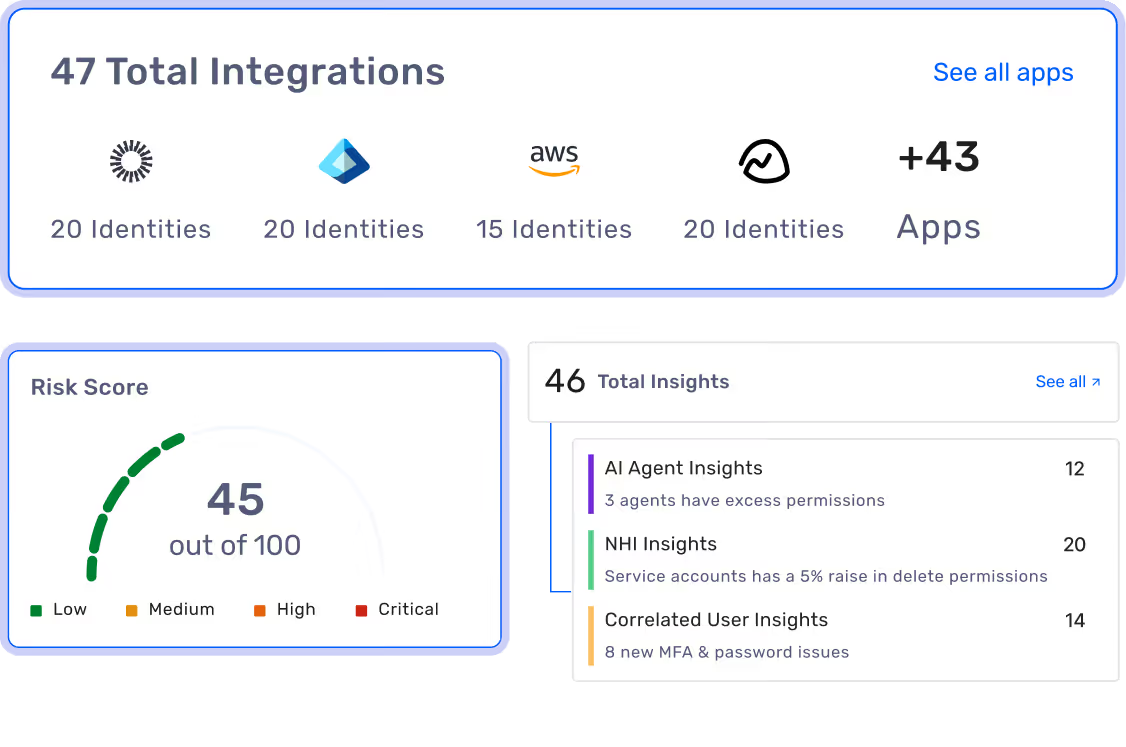
See every identity. Even the ones you've forgotten about.
- Automated discovery across 100+ integrations
- Full visibility into service accounts, shared credentials, and NHIs
- Continuous behavioural pattern tracking for anomalies
- Risk-scored on discovery, so you know what to tackle first
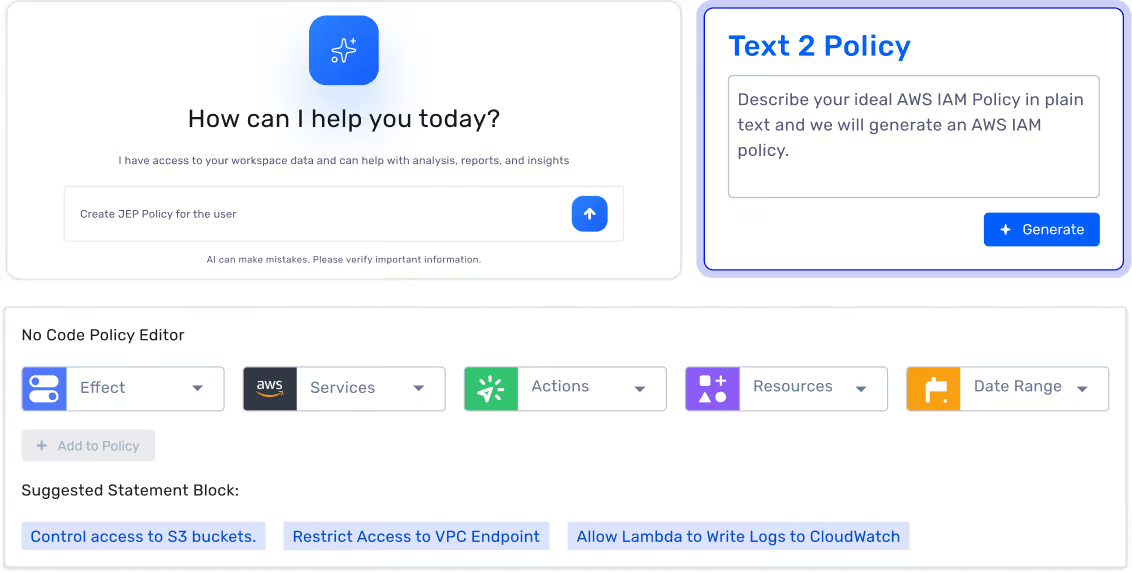
Policy enforcement without the engineering overhead.
- Automated access provisioning and revocation based on policies
- Granular, role specific security policies
- Workflow builder with no code dependencies
- Least privilege enforced consistently across every environment
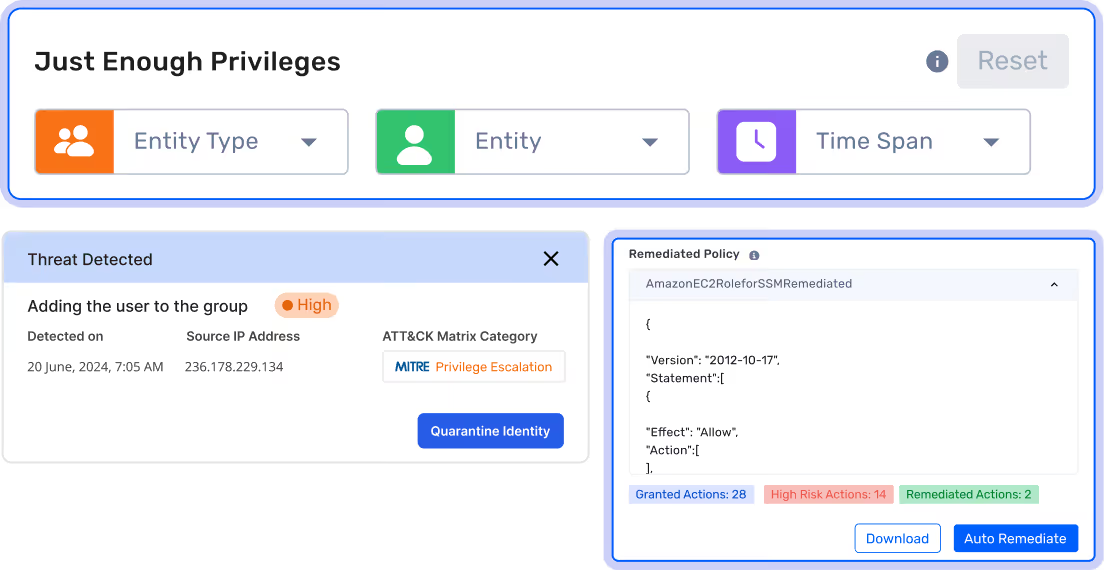
Risk closed before it becomes a breach.
- Instant automated threat response across your stack
- Activity based access control that adapts to real usage
- Scales to match organization growth
- Consistent policy enforcement across all connected environments.
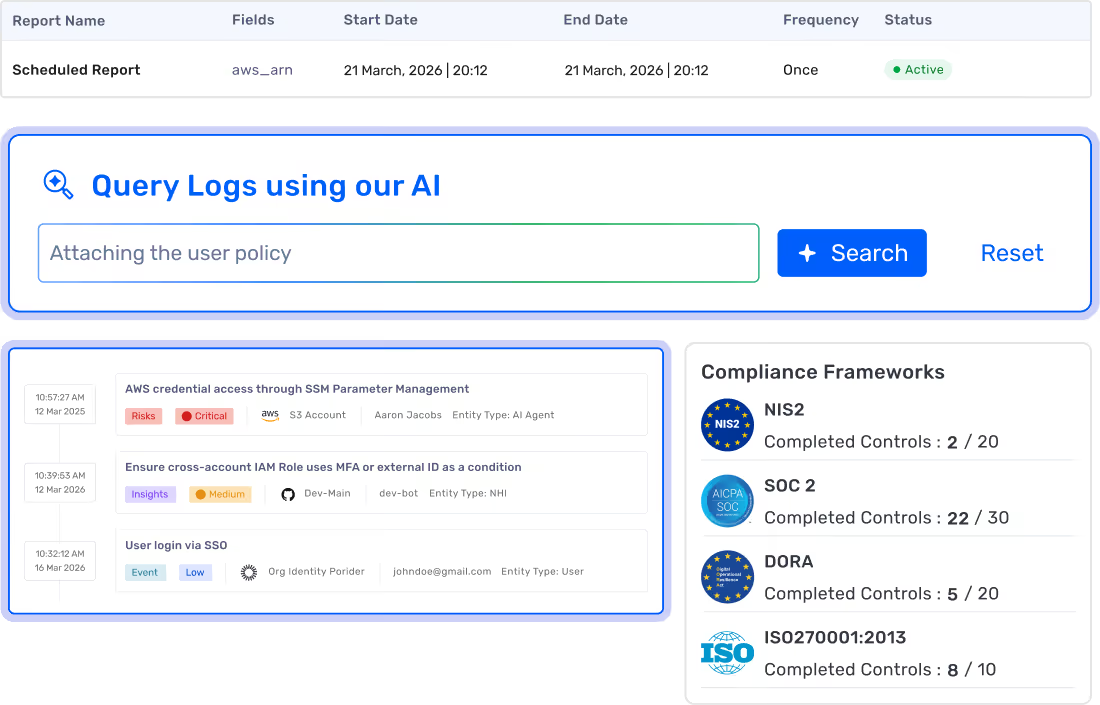
Every action logged, every audit answered before it begins.
- Complete access permission and activity analysis across all identity types permissions and activities
- Customisable, scheduled report generation for any compliance framework
- Tamper-evident trails built for SOC2, HIPAA, ISO, GDPR, NIS2 and DORA
- Powerful natural language querying (NLQ) for complex audit logs
Full-context threat detection across every environment.
- MITRE ATT&CK and machine learning driven threat detection
- In-depth forensic analysis tools for investigation
- Run-time alerts and notifications for suspicious activities
- Risk-based prioritization to surface high-risk actions first
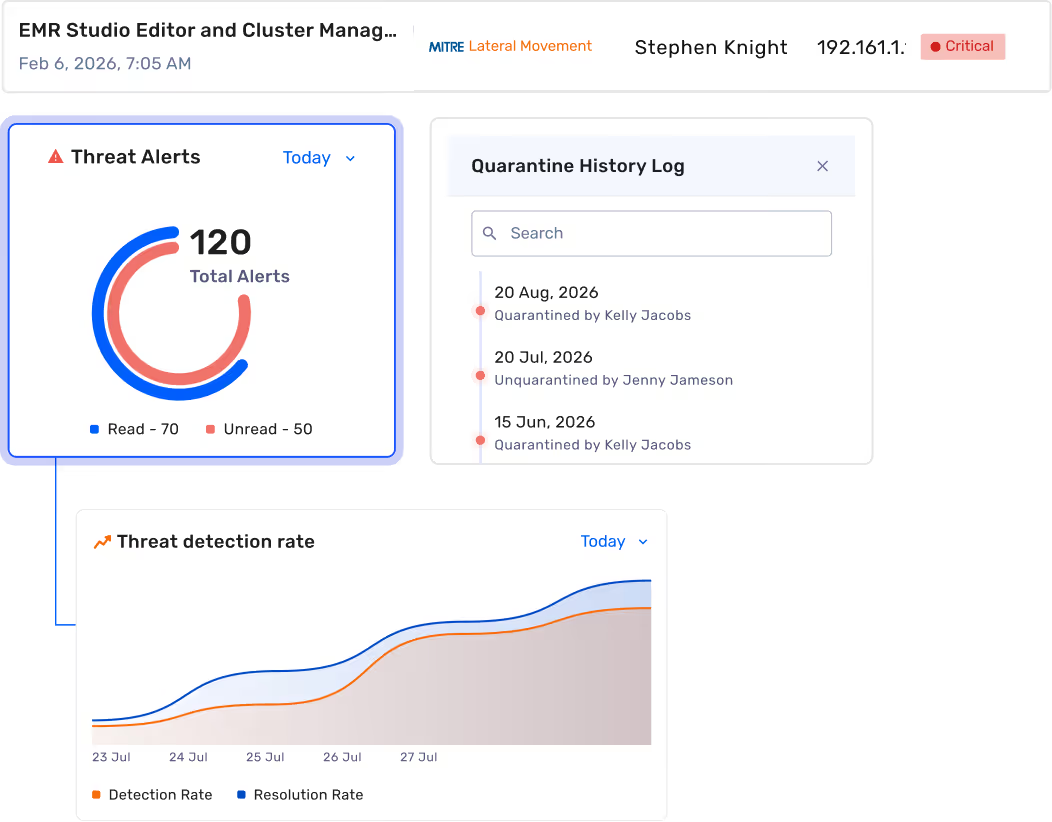
What unified context looks like in practice
When every identity signal flows through one system, insights emerge that no single tool can generate.
See the blast radius before it happens
Mapped access paths and blast radius of every identity, so you know the real impact of a compromise before an attacker does.
Patterns that span your whole environment
Correlated analytics surface the anomalies and privilege chains that stay invisible when each tool sees only its own slice.
Know exactly what to do next
Findings prioritized by real-world impact, with the single action that removes the most risk right now.
Unosecur Integrates across your Tech Stack
From cloud providers to collaboration tools, Unosecur plugs into the apps your enterprise runs on. Seamless integrations mean faster visibility, stronger controls, and fewer blind spots.





























Get a personalized demo
Ready to see Unosecur in action?
Everything you Need to Know

The platform discovers and continuously maps every identity across cloud, SaaS, and on-prem, including AI agents, NHIs, and human users. It baselines behaviour, surfaces privilege drift, correlates activity across systems, and triggers remediation. Reporting and audit trails work without manual stitching. Anything less leaves blind spots that attackers move through unnoticed.
Point tools fragment identity into silos: one for secrets, another for SaaS access, another for cloud entitlements. A unified platform correlates AI agents, NHIs, and human identities through a single graph, so a privilege chain spanning multiple systems is visible end to end. Investigation time drops, remediation stays consistent, and licence sprawl shrinks. The trade-off is platform commitment, which most teams accept once correlation gaps cost them.
Yes. While IGA and IAM provide a baseline, they leave blind spots such as locally managed users, shadow admins, AI agents, and non-human identities (NHIs) that aren't protected by MFA. Unosecur leverages native APIs rather than traditional integration protocols. Furthermore, Unosecur doesn't just take a "snapshot in time"; it analyzes activity and behavior to uncover and prioritize advanced identity risks and maintain identity hygiene.
Connect every identity provider, cloud account, and SaaS app through native APIs. Normalise the telemetry into a common identity graph that links accounts, entitlements, and behaviour across systems. Map ownership, including for orphaned and shared accounts. Run continuous discovery, since static snapshots miss short-lived AI agent and NHI activity. The output is a single view where any identity's footprint is traceable across every environment.
Three things. The platform uses behavioural models to baseline what each identity normally does, so anomalies surface without manual rules. It secures AI agents as first-class identities, with provenance, scoped permissions, and runtime monitoring. And it exposes a natural language layer over the identity graph, so investigation and reporting work without query languages. Anything else is a chatbot bolted onto a legacy stack.
Zero trust assumes no implicit trust based on network position, which means every access decision turns on identity. The architecture only works if every identity, including AI agents and NHIs, is discovered, owned, scoped to least privilege, and monitored at runtime. Without that foundation, zero trust collapses into static rules and stale entitlements that attackers exploit through over-permissioned service accounts and tokens.
Traditional access management focuses on provisioning, authentication, and role assignment, mostly for human users. Identity security covers the full lifecycle and runtime behaviour of every identity, including AI agents and NHIs, with continuous discovery, behavioural analytics, posture scoring, and threat correlation. Access management answers who can log in. Identity security answers who is doing what, with what privilege, across every system.
Inventory every NHI source: cloud roles, service accounts, OAuth grants, API keys, certificates, CI/CD secrets, and SaaS-to-SaaS integrations. Continuously sync from each provider, attribute ownership to a human or team, map permissions to actual usage, and flag stale or over-privileged accounts. Static spreadsheets and quarterly reviews miss most of the footprint. NHIs typically outnumber humans by a wide margin in any modern enterprise.


%201.svg)



.webp)

.avif)
.webp)